


As usual the New Year, 2015, has started with a flurry of activities.
Let us first give you some great news. As you know, since our inception in 2002, we at DEF have been at the forefront of efforts in India, South Asia and the Asia-Pacific region to bridge the digital divide, smash the information barrier, empower people and bring about greater socio-economic equality.
Our journey has been nothing short of exciting. Despite facing some hell or high water once in a while, which always happens when you embark on a long sojourn, we have still crossed many milestones and notched up quite a few satisfying achievements.
We now feel we need to document our peregrinations, successes and failures over the past 12 years in the form of a documentary film. The good news is well-known Australian film maker and musician Andrew Richard Mathew Garton (http://en.wikipedia.org/wiki/Andrew_Garton) has especially flown down from Melbourne, Australia to take up this task of telling the story of how our work has impacted millions of lives in India. Upon arrival in India, he wasted no time and together with our audio-visual team straightaway began work on retracing our trail.
Read about this “Journey Within A Journey” in this issue. You may also visit our blog http://upliftdoco.tumblr.com for an interesting blow by blow account on the making of this documentary. And of course, please do send in your views and suggestions.
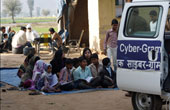
But journeys require vehicles and one of the primary vehicles that we use to cross the information barrier is the Community Information Resource Centre (CIRC). CIRCs play a vital role in creating digital infrastructure in remote and rural areas and empower information-dark marginalised or underserved communities through various ways such as spreading digital literacy, providing access to health and education, connecting rural markets to mainstream markets, enabling people to know about their rights and entitlements, allowing them access to as well as demand government services and so on.
In this issue read about two of our CIRCs in somewhat remote locations in the North East Indian state of Assam.
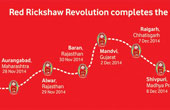
Empowerment of women is one of the key destinations in our journey. We launched the Red Rickshaw Revolution in 2012 with the objective of empowering 200000 women across India. After travelling through various places in West and North India, the Red Rickshaw reached its final destination Kolkata on December 17, 2014. Read our report on this journey.
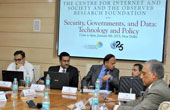
Our expedition has always been interspersed with advocacy campaigns on such issues as Internet Rights, role of governments and data security and of course, government policies and initiatives to bridge the digital divide. Read three reports on DEF’s participation in conferences on Internet Rights and data security.
Finally, do read our status report on one of the most ambitious government initiatives to end information darkness in India – the National Optical Fibre Network (NOFN) project. Under the project, the government has set up a special purpose vehicle named Bharat Broadband Network Ltd (BBNL) to connect all the 250000 village Panchayats in India through an optical fibre network that would ensure a minimum broadband connectivity speed of 2.5 mbps by 2015 (revised schedule, earlier the end date was 2014).
You will be appalled to know that the programme is not only way behind schedule but even the pilot project that the government claims it completed in 2012 connecting some 59 Panchayats seems horribly underperforming and in some cases simply incomplete. It is obvious from this report that the Prime Minister’s Digital India vision will remain just a vision and never a reality unless the government pulls itself up by the bootstraps to make BBNL a more effective and efficient agency for bringing about connectivity across the country.
You may also read our founder and Director Osama Manzar’s column in Mint on this issue Building another pipe dream? . This premier business newspaper has also published another report on the same subject - Study disputes effectiveness of govt’s optical fibre project.
Perhaps, it is time to call in the cavalry and go for a larger role of the private sector in this project. It is up to the government to decide how but state-owned companies such as BBNL and BSNL simply do not seem to have the ability to deliver any kind of results, leave alone effectively and efficiently.
This issue is of vital importance to the cause of digital inclusion. Please use our platform to voice your concerns and offer your recommendations.
We will not hold you back any longer from all the interesting material that lies before you in this issue. Happy reading dear readers!





आईआईटी मुंबई के एक पूर्व छात्र ने अपने कुछ सहयोगियों की मदद से हिन्दी में सोशल नेटवर्किंग वेबसाइट ' शब्दनगरी' शुरु की है। यह साइट फेसबुक से प्रेरित है लेकिन उसकी हूबहू नकल नहीं है। 'शब्दनगरी' पर आप राष्ट्रभाषा हिन्दी में अपनी कहानियां, कविताएं और कॉमेंट डाल सकते हैं, साथ ही अपनी विचारधारा वाले लेखकों और हिन्दी भाषी लोगों से बहुत आसानी से जुड़ सकते हैं। Read more
वाशिंगटन, 23 जनवरी| अमेरिका के राष्ट्रपति बराक ओबामा के भारत दौरे से पहले दो अमेरिकी सांसदों ने उनसे भारत के प्रधानमंत्री नरेंद्र मोदी से ई-कॉमर्स के क्षेत्र में विदेशी प्रत्यक्ष निवेश (एफडीआई) पर लगी पाबंदी में ढील देने का अनुरोध करने के लिए कहा है। सीनेट की भारतीय मामलों से संबंधित समिति, जिसमें अमेरिका की दोनों प्रमुख राजनीतिक पार्टियों के सदस्य हैं, के अध्यक्षों ने ओबामा से यह अनुरोध किया। Read more
छत्तीसगढ़ में आदिवासी समुदाय के बीच काम करने वाली संस्था सीजीनेट स्वरा ने एक जनवरी से छत्तीसगढ़ की राजधानी रायपुर से जनपत्रकारिता जागरूकता यात्रा शुरू की है. इस यात्रा का उद्देशय सीजीनेट स्वरा की जन पत्रकारिता के बारे में नुक्कड़ नाटकों और नाट्य प्रस्तुतियों के ज़रिए जागरूकता फैलाना है. इस यात्रा के दौरान मध्यभारत के छत्तीसगढ़, मध्यप्रदेश, महाराष्ट्र Read more
Microsoft has revealed that Windows 10 will bring its voice-controlled assistant Cortana to PCs. It also unveiled a headset that it said would one day project the operating system over views of the real world. In addition, the firm announced that the OS upgrade would be offered free of charge. Read more
AS much as we love our digital devices, many of us have an uneasy sense that they are destroying our attention spans. We skitter from app to app, seldom alighting for long. Our ability to concentrate is shot, right? Research shows that our intuition is wrong. We can focus.Read more
SINGAPORE— Twitter Inc. is acquiring India-based mobile marketing startup ZipDial in its first acquisition in Asia as it seeks to tap users in emerging markets. Financial terms of the deal weren’t disclosed. Bangalore-based ZipDial is known for its success at “missed call” marketing. Read more
India’s ICICI Bank has launched a new service called “icicibankpay” that allows customers to transfer money using Twitter.Customers simply need to follow the bank’s Twitter account to register their mobile phone with the bank and then send @icicibank. Read more
Andhra Pradesh government, led by tech-savvy Chief Minister Chandrababu Naidu, plans to provide broadband connections with peak speed of 15 Mbps to twelve million households for as low as Rs 150/month in the first stage of its about Rs 5,000-crore optical fibre project. Read more
इंटरनेट के क्षेत्र की दुनिया की नंबर 1 कंपनी गूगल जल्द ही मोबाइल इंटरनेट डेटा प्लान्स पेश करने वाली है। रिपोर्ट्स के मुताबिक, गूगल ने इसके लिए एक मोबाइल इंटरनेट सेवा कंपनी से शुरुआती बातचीत भी की है। गूगल ने इसे ‘प्रॉजेक्ट नोवा’ नाम दिया है। नोवा के तहत गूगल तेज और सस्ता मोबाइल इंटरनेट लॉन्च करेगी। Read more
केंद्र सरकार अगले तीन सालों में देश के 2500 शहरों और कस्बों में मुफ्त हाईस्पीड वाई-फाई की सुविधा मुहैया कराएगी. हालांकि मुफ्त सेवा का लाभ तय समय के लिए मिलेगा और इसके बाद यूजर को इंटरनेट यूज करने पर चार्ज देना होगा. सार्वजनिक क्षेत्र की कंपनी भारत संचार निगम लिमिटेड (बीएसएनएल) द्वारा लागू की जाने वाली इस योजना में सात हजार करोड़ रुपये निवेश किए जाएंगे.Read more
केंद्रीय संचार एवं सूचना प्रौद्योगिकी मंत्री रवि शंकर प्रसाद केरल के इदुक्की जिले में आज यानी 12 जनवरी को डिजिटल इंडिया कार्यक्रम के अंतर्गत आयोजित एक समारोह में भारत के पहले हाई-स्पीड ग्रामीण ब्रॉडबैंड नेटवर्क का शुभारंभ करेंगे। एक आधिकारिक बयान में कहा गया है कि डिजिटल इंडिया के नए युग के सूत्रपात में यह आयोजन एक महत्वपूर्ण मील का पत्थर है। Read more
Facebook enabled USD 4 billion economic impact on the Indian economy and contributed to 335,000 jobs in some or the other way during last year, according to a report by consultancy firm Deloitte. The study titled ‘Facebook’s Global Economic Impact’ analyses how the social networking site has facilitated growth. Read more
In Silicon Valley's youth-obsessed culture, 40-year-olds get plastic surgery to fit in. But IDEO, the firm that famously developed the first mouse for Apple, has a 90-year-old designer on staff. Barbara Beskind says her age is an advantage. "Everybody who ages is going to be their own problem-solver,". Read more
New Delhi, Jan 19: Labour Ministry plans to issue a single smartcard for formal sector workers to help them avail of a host of benefits under different social security schemes such as pension, provident fund and health insurance. The ministry will seed employees' details such as Universal PF. Read more
Since its debut in 2012, Google Glass always faced a strong headwind. Even on celebrities it looked, well, dorky. The device itself, once released in the wild, was seen as half-baked, and developers lost interest.Read more
The ninth annual India Digital Summit (IDS), hosted by the Internet and Mobile Association of India, wrapped up in Delhi this week with dozens of speakers addressing a range of important issues. How big is the Internet market in India today? How fast is smartphone penetration increasing?Read more


House No. 44, 3rd Floor Kalu Sarai, (Near IIT Flyover) New Delhi – 110016
Subscribe to our mailing list | Email : def@defindia.net | URL : www.defindia.net
Tel: +91-11-26532786 / Fax: +91-11-26532787