
January, 2026
Editor's Note
This month’s stories reflect a powerful truth,digital inclusion in India is no longer just about connectivity; it is about people, purpose, and participation. Across villages and small towns, individuals are stepping into new roles as digital enablers, bringing essential services, information, and opportunities closer to their communities. Read more
Digital Op-Ed
The article explores how telemedicine in rural India has emerged as a promising tool for preventive healthcare, helping bridge gaps caused by weak healthcare infrastructure, long travel distances, and shortage of doctors. Platforms like eSanjeevani have enabled remote consultations and improved access to specialists, especially during and after COVID-19, making healthcare more time- and cost-efficient for rural populations.
However, it highlights that the impact remains uneven due to challenges such as poor digital infrastructure, low digital and health literacy, gender disparities, lack of follow-up care, and dependence on intermediaries like local “healthpreneurs.”
Read more
Stories from the Ground
Access and Infrastructure
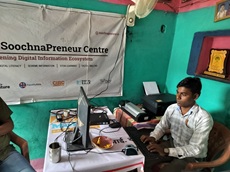
“The biggest change in my life has been being able to enrol my two children in a private school, a dream that once felt out of reach,” shares SoochnaPreneur Ranju Bamniya, her words reflecting both pride and perseverance. For Ranju, this milestone is not just about education—it is the result of a journey filled with determination, learning, and quiet resilience. There was a time when her days revolved around managing household... Read more
Education and Empowerment
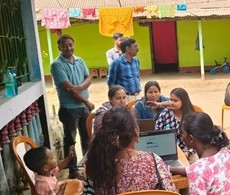
In the lush tea garden communities of Jalpaiguri, where access to essential services has often been limited, a quiet transformation is taking root led by local women stepping into the role of digital changemakers. “Today, we learned about various digital services that we will be providing to community members in our Tea Garden. Services such as PAN card applications, health card support, insurance-related information, and other essential digital facilities were new to me earlier. Read more
Market & Social Enterprises
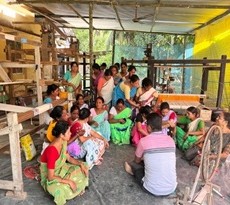
In the weaving communities of Assam, skill and tradition run deep—but opportunity often does not. Across districts like Darrang, many rural women entrepreneurs (RWEs) possess exceptional craftsmanship, yet their enterprises remain limited by a lack of digital access, market awareness, and institutional support. For women like Sakuntala Das from Paschim Mangaldoi and Hemaprava Kalita from Sipajhar block, weaving is not just a livelihood—it is a legacy. Read more
Governance and Citizen Services
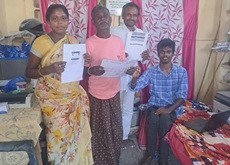
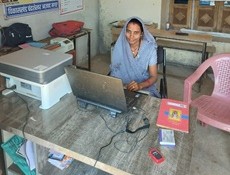
“My name is Neerudu Paramesh, and I am from Buddaram Village, Nalgonda. This journey has taught me that with determination and the right support, any challenge can be overcome.” Paramesh’s story is one of resilience—but more importantly, it is a story of service. After a severe spinal injury in 2020 left him confined to his home for nearly a year, rebuilding life was not easy. Read more
Research and Advocacy

Bazm-e-Sukhan is nurtured under A-CODE (Art & Collective for Digital Empowerment), an initiative led by Centre for Development Policy & Practice (CDPP) in partnership with the Digital Empowerment Foundation (DEF) that foregrounds community knowledge systems, cultural agency, and ethical digital inclusion. Read more
EDGE: 30 years of the Internet in India
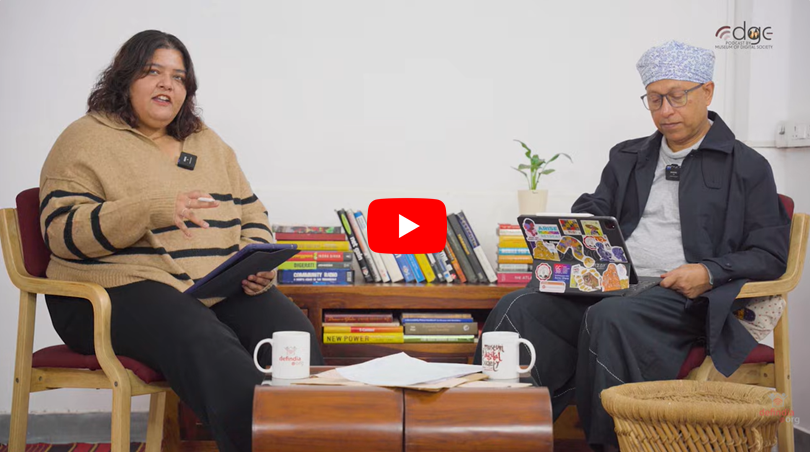
EDGE is a podcast series by the Museum of Digital Society in collaboration with the Digital Empowerment Foundation, chronicling 30 years of the Internet in India.
In Episode 1 (1995–2000), we return to the moment public internet services first arrived in the country and explore what it felt like when the internet was new, experimental, and full of possibility. In conversation with Osama Manzar, Founder-Director of Digital Empowerment Foundation, this episode reflects on dial-up connections, early newsroom digitisation, the rise of online news for the diaspora, and a time when the web was driven by curiosity, trust, and discovery. Drawing from his experience as a journalist and early internet practitioner, Osama traces how these formative years laid the foundations for digital empowerment in India, long before smartphones and social media reshaped everyday life.