
March, 2026
Editor's Note
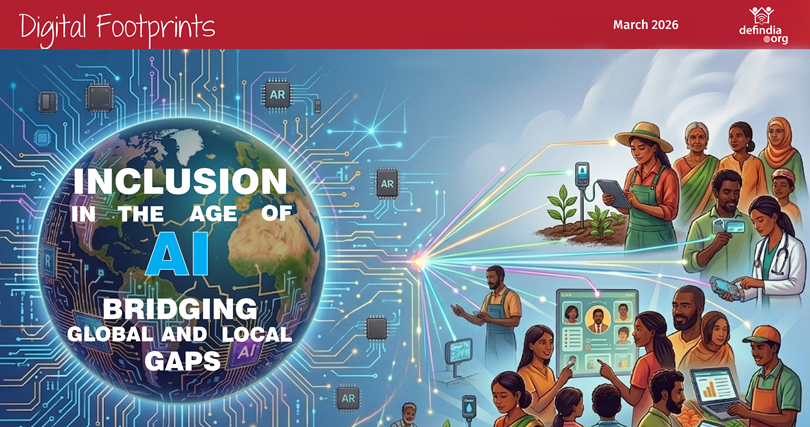
As conversations around technology grow louder at global forums, it is equally important to ground them in the realities of everyday lives. This edition brings together two seemingly different but deeply connected worlds high-level dialogues on artificial intelligence and grassroots stories of digital empowerment from rural India. Read more
Digital Op-Ed
The article explores the growing tension between India’s AI ambitions and its net-zero climate goals, arguing that the rapid expansion of AI infrastructure, especially data centres, could significantly increase electricity and water demand. It highlights how this surge in energy needs risks locking India into more fossil fuel use if renewable capacity and grid systems don’t scale fast enough.
At the same time, the piece points out that AI is not just a climate risk but also a potential tool for efficiency and decarbonisation if planned well. Ultimately, it argues that whether AI becomes a climate burden or a climate solution depends on how India aligns its technology growth with energy planning, sustainability policies, and infrastructure investment.
Read more
Stories from the Ground
Access and Infrastructure
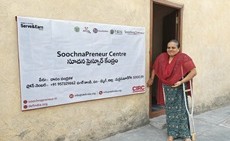
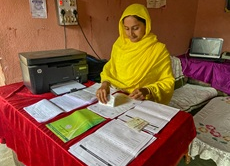
Life took an unexpected turn for Dasari Chandrakala when a tragic accident forced her to leave her job at a bank. What followed was a period of immense hardship. With both she and her husband living with physical disabilities, the family struggled to make ends meet, relying solely on their pensions for survival. Read more
Education and Empowerment
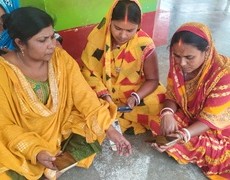
In the quiet village of Nowadih, nestled in the Baghmundi Block of Purulia district, a powerful transformation is underway—one driven by knowledge, technology, and the determination of rural women to shape their own futures. An advanced training session conducted through innovative Learning Management System (LMS) tools recently brought together 26 Rural Women Entrepreneurs (RWEs), each eager to expand her digital horizons. Read more
Market & Social Enterprises
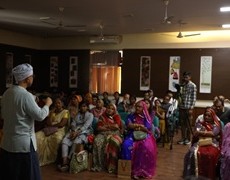
At the Indian Institute of Crafts & Design (IICD), Jaipur, a one-day seminar brought together artisans, practitioners, and experts to explore how technology can strengthen craft-based enterprises. Organised under the National Handicrafts Development Programme (NHDP) and supported by the Development Commissioner (Handicrafts), Ministry of Textiles, the workshop created a space for dialogue between tradition and innovation. Read more
Governance and Citizen Services
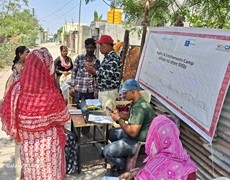
Access to essential government services can often be a challenge for rural communities, especially for those who lack digital literacy or resources. Bridging this gap, a recent Digital Yojana Camp organized in Solapur, Maharashtra, demonstrated how targeted grassroots efforts can transform lives. The camp focused on supporting local artisans and weavers by connecting them to crucial government and digital services. Read more
Research and Advocacy
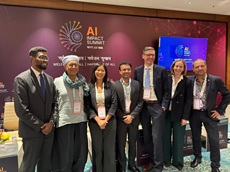
The Digital Empowerment Foundation (DEF) and its Just AI – Data & Algorithms for Communities initiative actively participated in the India AI Impact Summit 2026, advancing a strong people-centric and Global South perspective on AI governance, safety, and digital public infrastructure. Across multiple high-level engagements, DEF ensured that community voices, grassroots realities, and rights-based frameworks remained central to conversations shaping the future of AI. Read more
EDGE: 30 years of the Internet in India
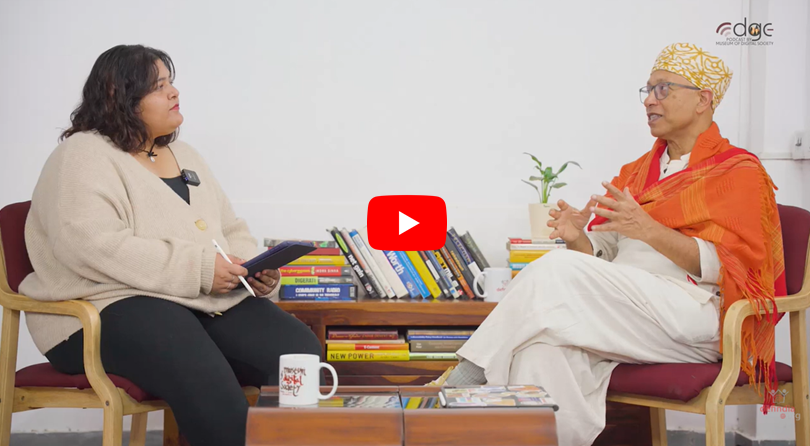
The country had already emerged as a global software powerhouse post-Y2K, powering service economies worldwide. Industry bodies strengthened, the IT sector expanded rapidly, and India solidified its identity as a software-driven nation.
At the same time, the government accelerated e-governance efforts seeking to digitize not just internal processes, but public service delivery. The Common Service Centre (CSC) framework was introduced to take services to the grassroots, marking a major structural shift toward inclusion.
Parallel to this, the mobile revolution began reshaping access. Smartphones entered the scene. Social media platforms like Facebook and Twitter gave individuals new forms of expression. The fourth screen of the handheld device started transforming how people consumed, created, and shared information.
This episode explores the intersection of software boom, state digitisation, social media expansion, and the early struggles of inclusion.