


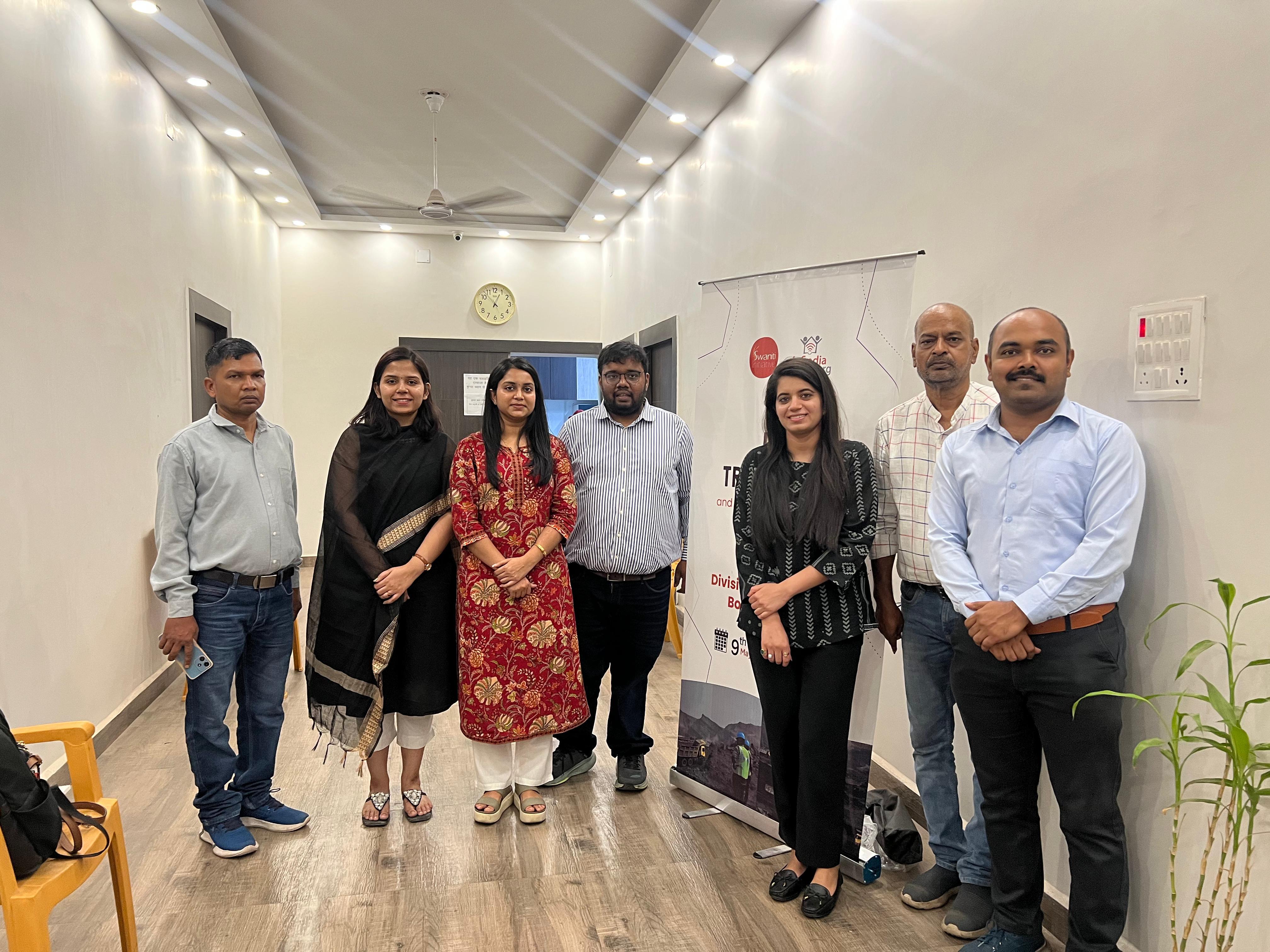
As India moves away from coal, how do we ensure communities are not left behind? This edition highlights DEF’s journey in Jharkhand’s coal regions — blending research, digital empowerment, and community leadership to build pathways for a just, inclusive transition.
Over the last two years, the Digital Empowerment Foundation (DEF), in collaboration with Swaniti Initiative, has led the Just Transition & Economic Diversification of Jharkhand’s Coal Heartland project — a transformative, community-centered initiative in the coal districts of Ramgarh and Bokaro. Focused on addressing the realities of coal dependency while paving digital pathways for livelihood diversification, this project marked a critical step in reimagining a future beyond fossil fuels.

Through a combination of 2,305 household and enterprise surveys, focus group discussions, and stakeholder consultations, the project documented the complex web of economic dependencies in coal communities and co-created transition strategies with those most affected.
Key Takeaways & Learnings
- Just Transition Must Be Ground-Up
Community voices, especially from women and youth, emphasized the need for diversified livelihoods rooted in agriculture, MSMEs, digital services, and cooperatives. Their aspirations reaffirm that policies must be tailored to local realities. - Digital is a Key Enabler
Digital access isn’t just about the internet or devices. It is a foundation for inclusion and opportunity. Community-driven models like SoochnaPreneurs and upcoming CIRCs (Community Information Resource Centres) have shown how digital tools can foster economic resilience and civic participation. - Participatory Research Builds Trust
By centering communities in the research from data collection to validation, the project fostered deep trust, creating a bridge between policy ambitions and lived experiences. - Economic Dependency is Deep & Layered
Coal’s influence runs through not just direct employment, but entire value chains — transport, retail, services. Transition must therefore address secondary and tertiary impacts to avoid economic displacement.

Publications that Shaped the Conversation
The project’s findings and insights have been consolidated in three key publications, now informing policy and discourse across India’s just transition landscape:
Just Transition & Economic Diversification of Jharkhand’s Coal Heartland
By Rishi Kishore, Sandeep Pai, Deeksha Pande, Arpita Kanjilal, Maitri Singh, Kumar Satyendra Singh, Suresh
Ram Ravidas
A first-of-its-kind, community-centered study that examines the economic dependencies of coal communities, businesses, and workers. It offers clear policy pathways for livelihood diversification in Ramgarh and Bokaro.
Recommended for: Policymakers, development practitioners, researchers.
Digital Just Transition: Digital Pathways for Community-Centered Just Transition
By Dr. Arpita Kanjilal and Maitri Singh
This paper argues that digital access and skills are essential, not optional, for communities facing transition. It explores how technology-driven solutions can strengthen social and economic resilience.
Recommended for: Policymakers, digital rights advocates, tech innovators.
Community Champions: Digital Leaders Shaping Just Transition
Edited by Dr. Arpita Kanjilal and Maitri Singh
A collection of stories profiling grassroots digital champions — especially rural women — who led the fieldwork and empowered their communities.
Recommended for: Social entrepreneurs, grassroots organizations, digital inclusion advocates.
Engagements and Impactful Conversations
The project’s findings have reached national and international platforms. At the WSA Global Congress 2025, DEF co-hosted a high-level session titled “Digital Just Climate Transition: Balancing People, Planet, and Progress”, where Jharkhand’s experience served as a powerful case study. In February, a state-level report launch in Ranchi convened senior policymakers, forest authorities, trade union leaders, and grassroots participants, bringing visibility and momentum to the call for inclusive, community-led transition frameworks.

What’s Next: From Research to Action
With the research phase complete, DEF is now focused on turning insights into scalable action:
- Establishing Community Information Resource Centres (CIRCs):
CIRCs will be set up in coal-affected blocks to provide digital access, skills training, e-services, and livelihood linkages, especially for women and youth. - Launching the Digital Just Transition Task Force:
A national network of experts across energy, tech, policy, and livelihoods will be convened to advise, innovate, and co-create frameworks for digital-first just transition models. - Sustained Policy Engagement:
DEF will continue working with state and national bodies to ensure digital empowerment becomes a core pillar of transition strategies, not an afterthought.
This project was not just about studying change — it was about enabling it. As India’s coal regions face an uncertain future, Just Transition & Economic Diversification of Jharkhand’s Coal Heartland offers a model for how inclusive, digitally-enabled transformation can look, led by communities, guided by evidence, and powered by purpose.