


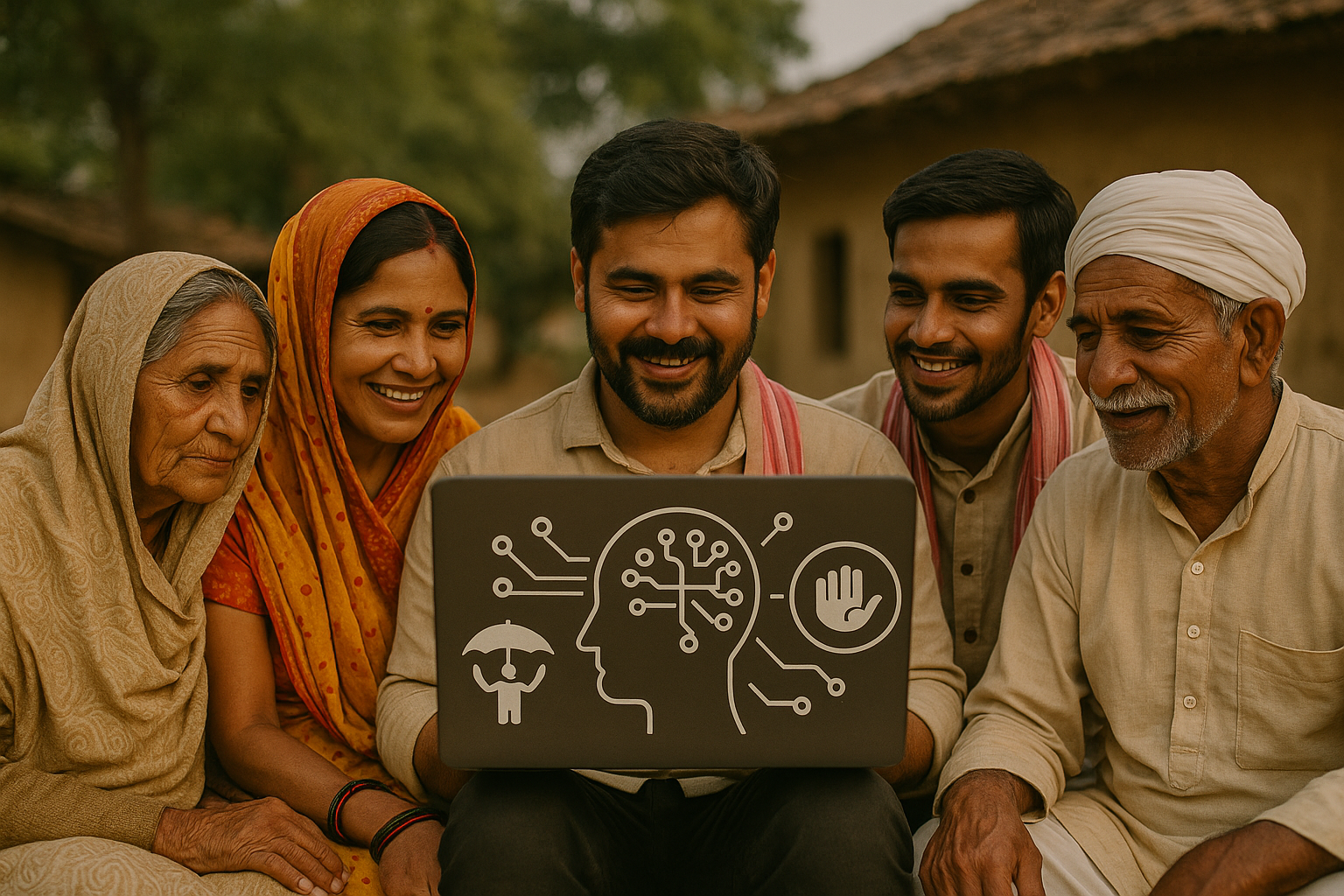
In today’s algorithmically governed world, the digital space has become a battleground for justice. From deciding who receives welfare benefits to whose identities are erased by misinformation, algorithms and data infrastructures are increasingly shaping public life. The Algorithmic Chronicles and Digital Democracy: Democracy of Whom? projects, both part of the Just AI – Data and Algorithms for Communities Initiative by the Digital Empowerment Foundation (DEF), document and analyse these changes in modern-day India. These initiatives go beyond simply serving as information repositories; they are interventions aimed at building a more equitable digital environment.
Digital technologies like AI, machine learning, and surveillance systems are often presented as neutral, effective tools for progress. However, researchers like Virginia Eubanks (2017), Safiya Noble (2018), and Ruha Benjamin (2019) highlight how these technologies often reproduce and deepen systemic injustices, reinforcing prejudices tied to economic status, gender, caste, and race.
Algorithmic Chronicles serves as a living media archive that meticulously records how Indian newspapers, television, and digital platforms have reported on AI’s societal impact over the past decade. This archive shines a light on the often-overlooked costs of automation, documenting instances of algorithmic bias, data injustice, deepfake misinformation, and digital surveillance. Examples include deepfake disinformation that fuels intercommunal conflict, wrongful arrests due to faulty facial recognition technology, and biased loan approvals that disproportionately affect marginalised communities. The project also draws attention to the environmental and social impacts of data centres in places like Tamil Nadu, where local communities are displaced, and the environment suffers. This archive not only chronicles these stories but also questions how these events are told and what is left out. It urges us to ask: When we discuss AI in India, whose stories are told and whose are omitted?
Meanwhile, Digital Democracy: Democracy of Whom? takes a broader approach, focusing on tracking constitutional violations and digital exclusions through themes like hate speech, internet shutdowns, and caste and gender discrimination. This project paints a holistic picture of how marginalised communities are often excluded from the benefits of a digital India. For instance, it tracks the internet shutdowns used to suppress dissent, especially in areas like Northeast India and Jammu & Kashmir, where 132 shutdowns took place in 2020. These incidents represent not just violations of digital rights but also failures to uphold human dignity in a digital age. This database serves as a powerful tool for advocacy, policy reform, and democratic renewal.
As India continues its journey toward greater digitalisation, the risks of data-driven oppression are heightened, especially with the increasing use of facial recognition technology, Aadhaar-linked services, and AI-powered policing. Both Algorithmic Chronicles and Digital Democracy create essential archives that serve as tools for envisioning and creating just digital futures. They are not only about documenting the past and present but also about shaping the future.
Journalists investigating digital abuses, researchers mapping AI bias, lawyers defending constitutional rights, and activists organising resistance all rely on these archives. They help ensure that the digital age is not defined by forgetfulness but by accountability. Above all, these projects confront us with an urgent question: For whom is digital democracy meant? Without incorporating these critical databases into public policy and discourse, the so-called “digital revolution” will remain a closed, often harmful phenomenon.
Documenting injustice in the digital era becomes an act of resistance, especially in a world where digital systems can erase identities and algorithms can determine fates. Projects like Digital Democracy: Democracy of Whom? and Algorithmic Chronicles are vital because they advocate for memory and responsibility in the face of digital harm, ultimately enabling us to recover a just future.