


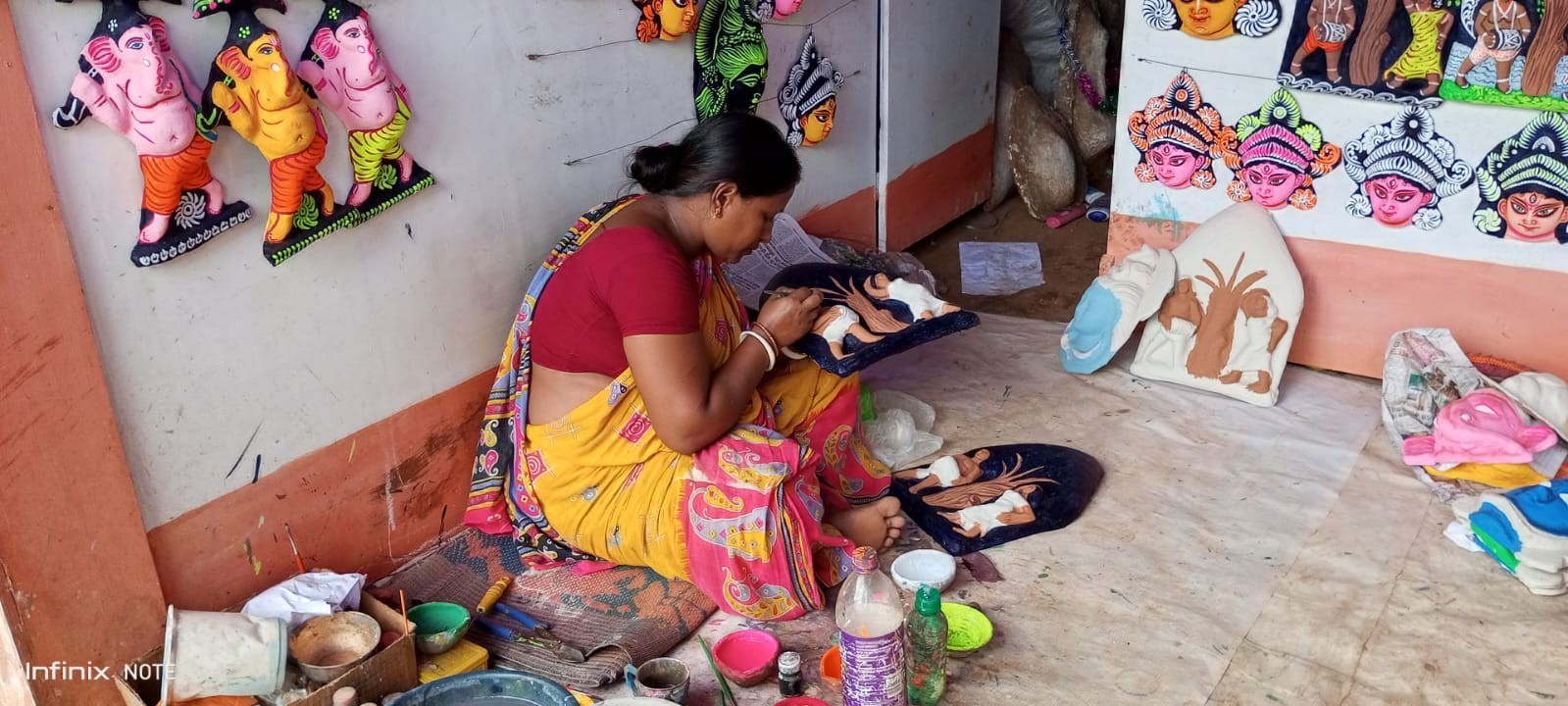
In West Bengal, where talent meets tradition, artisans have been weaving, stitching, carving, and crafting for generations. In rural areas, despite their skills, access to sustainable markets and consistent income has remained elusive. Digikargha, working at the intersection of craft and commerce, has taken a transformative step to change this narrative. Under the thematic area of Market and Social Enterprises, Digikargha launched eight pop-up locations across rural West Bengal, each carefully curated to provide artisans with more than just a marketplace it offered visibility, infrastructure, capacity-building, and inclusion in a digital economy.
The Pop-Up Model
The pop-up locations were unique, not typical retail spaces. Established in artisan villages and districts such as Nadia, Purulia, Murshidabad, Birbhum, and Malda, these locations were designed to function as micro-hubs for local craft-based entrepreneurs. The model was simple yet impactful: it involved onboarding artisans from these clusters, documenting and cataloguing their products, and providing training in key areas to empower them to manage and grow their small businesses independently.

Through this initiative, seven artisan women have emerged as leaders of their respective clusters:
- Sheuli Khatun, from Harinadi village in Nadia, specialises in handloom Jamdani and cotton sarees.
- Mitali Sutradhar, from Charida village in Purulia, crafts Chhau masks rooted in tribal traditions and folk performances.
- Rosna Khatun, based in Esser Para, Murshidabad, works with eco-friendly jute-based handicrafts.
- Jinnattunnesa Khatun, from Supur, Birbhum, creates intricate Kantha-stitched products for home and fashion.
- Puja Ghosh, from Chak Islampur, Murshidabad, deals in Khadi and cotton products—simple but sustainable.
- Sharmila Hembram, based in Aam Bazar, Mokdumpur, Malda, is an expert in Kantha embroidery, combining beauty with functionality.
- Renuka Kuiry, from Tunturi village in Purulia, offers food and Agri-allied products, drawing from indigenous practices and ingredients.
Each artisan was provided with essential infrastructure for their pop-up space, including branding materials, product display racks, and packaging solutions. More importantly, Digikargha prioritised capacity building.

The owner of the Pop-Up and the artisans have received training in stock maintenance, creating SKUs, photography, visual storytelling, and using WhatsApp Business and Instagram for direct customer engagement.
Digikargha aims to enhance their skills, improve their sales potential, and help them understand the importance of digital presence and personal branding.
Training session at Amar Kutir, Birbhum
A key milestone in this journey was a training session conducted at Amar Kutir Society, Birbhum, a hub of rural artisanship. The day-long workshop was attended by a group of artisans from the surrounding districts.

Digikargha’s team conducted interactive sessions on four key modules: Digital Cataloguing, Profiling and Portfolio Support, Digital Media for Promotion and Sales, and Product Quality, Branding, Packaging, and Delivery. They also covered Critical Literacy and Banking Solutions Safety. Artisans were encouraged to take their product photos using natural light and mobile cameras. The objective was straightforward: to empower them to share their own stories.
This peer-learning model generated a positive ripple effect. The artisans were highly engaged and inquisitive. For example, after the training, Jinat, an artisan from Malda, began posting photos of her Kantha products on Instagram Stories and started receiving direct inquiries. We are now planning to feature their products on Digikargha’s e-commerce platform, allowing them to reach a pan-India and even global audience.

Digikargha’s pop-up initiative in West Bengal is more than just a market intervention; it represents a story of self-reliance, inclusion, and the reimagining of tradition in the digital age. This initiative illustrates how a social enterprise can create scalable models that are grounded in local realities while fostering innovation and ownership among artisan communities.
In the next phase, Digikargha plans to expand this model to other clusters, offer advanced training, and establish artisan-led retail spaces in rural India.