


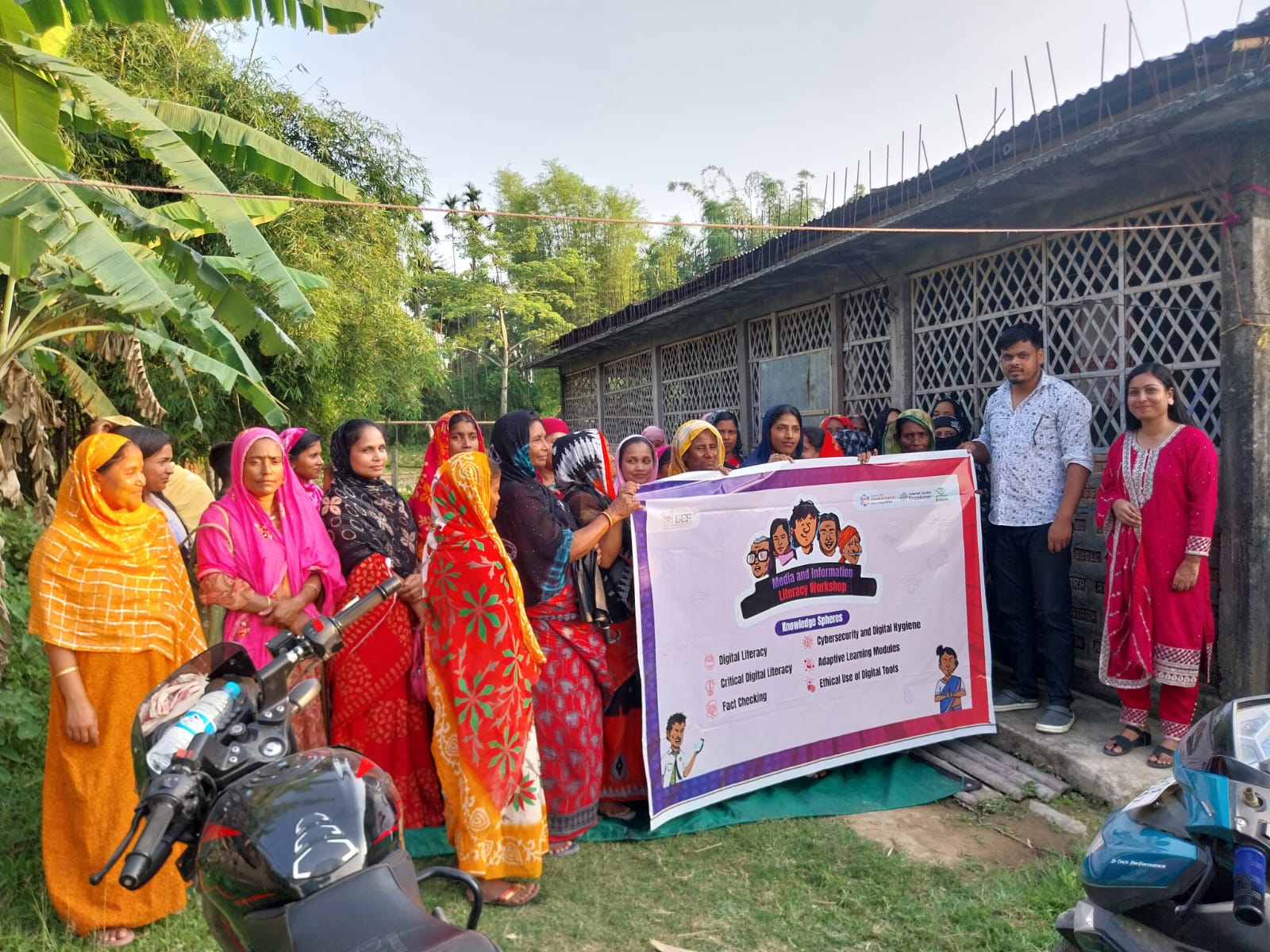
A Media and Information Literacy (MIL) workshop was organised in Bagpur, Cachar, Assam, drawing 54 participants from diverse backgrounds, including local youth, members of Self-Help Groups (SHGs), and other community members. The workshop aimed to equip participants with the tools to critically assess information, identify misinformation, and engage more responsibly with digital platforms.
In a time when misleading content and viral misinformation can spread within seconds, the need for grassroots media literacy is more urgent than ever. This workshop, held as part of a larger digital awareness effort, focused on three core areas: spotting fake news, understanding media bias, and promoting ethical and responsible content creation.

Participants engaged in interactive sessions that broke down how to assess online information—learning to question the source, verify facts, and recognise manipulated or emotionally charged content. The group also explored how their own beliefs and experiences can affect the way they interpret media, and discussed strategies for building awareness within their communities.
Real-world case studies brought the learning to life. One session highlighted how false information circulated during natural disasters and health crises had direct consequences on community behaviour. These stories sparked thoughtful discussions and gave participants practical context for applying their new skills.
Group activities and hands-on exercises helped reinforce learning in a collaborative, engaging way. From identifying doctored images to crafting ethical messages, participants worked together to put their knowledge into practice. The result was not only a deeper understanding but also a sense of shared purpose.

“This workshop has opened my eyes to how easily we can be misled online,” shared Rekha Devi, an SHG member from the village. “Now I know what to look for before forwarding something, and I want to share this with the rest of my group.”
Workshops like this are vital for building resilient digital communities, especially in rural areas where access to accurate information can be a challenge. The session at Bagpur was a meaningful step in that direction, and we hope to replicate this model across more villages in Assam and beyond.