


In the industrious town of Golaghat, Assam, one woman’s quiet determination is reshaping how rural women access not just markets, but also the rights and schemes meant for them. Pronita Bora, once a handloom entrepreneur selling her vibrant weaves only to neighbours and passersby, has grown into a digital leader who is helping women step into the formal economy and connect with government support systems that once felt out of reach.
Her beginnings were humble. Working from home, her handwoven fabrics reflected Assam’s rich tradition, but her world remained confined within the village. She lacked the tools to grow or the awareness of government schemes designed for small entrepreneurs like her. What she did have was determination—not just to succeed herself, but to lift others along with her.
That opportunity came when she connected with the Digital Empowerment Foundation (DEF). Technology, once unfamiliar, became her bridge to knowledge, markets, and governance. With DEF’s guidance, Pronita embraced digital skills and set up a small Digital Centre in a rented space. What began as a retail corner for her handloom products soon expanded into something much bigger: a hub where women could access schemes, services, and opportunities that had long bypassed them.
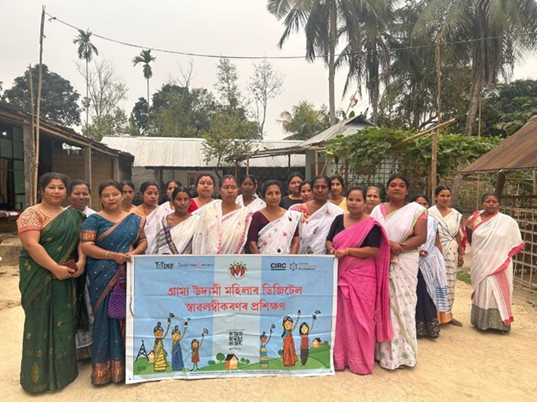
Today, Pronita works with over 100 Rural Women Entrepreneurs (RWEs)—weavers, tailors, food processors, and artisans. Beyond mentoring them in digital marketing, she ensures they are formally recognised by government systems. She has helped women apply for Udyam registration (giving them an MSME identity), secure FSSAI licenses (legalising their food businesses), and navigate applications for welfare schemes and loans. For many, these documents were once barriers, locked behind unfamiliar processes. With Pronita’s patient guidance, they have become passports to growth.
Her centre has also become a vital bridge between citizens and government. Villagers approach her for ration card updates, health ID registrations, pension applications, scholarship forms, and e-shram cards. Shopkeepers learn digital payments from her; schools rely on her for bulk printing and online processes. She doesn’t just provide services—she explains them, demystifying policies in simple terms so people understand their rights and benefits.

The change is visible. Women who once doubted their eligibility now proudly call themselves registered entrepreneurs. Food vendors who feared being “illegal” now display their FSSAI licenses. Young women who once hesitated to touch a smartphone now apply for schemes online with confidence. “Earlier, they came to me with doubts. Now, they come with ideas,” Pronita smiles.
Yes, her income has grown—but her true success lies in the pathways she is opening. By weaving together tradition, technology, and governance, Pronita has become more than an entrepreneur. She is a mentor, a connector, and a catalyst for systemic change.
Every form she helps fill, every license she secures, every woman she guides is part of a larger story: rural women stepping into the formal economy with dignity and strength. From her loom at home to her Digital Centre in Golaghat, Pronita Bora is showing that empowerment is not just about earning—it is about claiming space in systems that once excluded them.