




Are Children Truly ‘Social’ on Social Media, or Just Alone Together?
Dr. Arpita Kanjilal, Maitri Singh and Mili Dangwal
Published on: April 28, 2026
Data centers are central to India’s digital ambitions, but their impacts extend far beyond infrastructure. In Telangana’s peri-urban regions, communities are experiencing these changes through land loss, water stress, and shifting livelihoods. Drawing on findings from the report “Just AI, Just Land”, this blog unpacks the hidden socio-environmental costs of AI-led development and argues for a more participatory, transparent, and community-centred approach to AI governance.
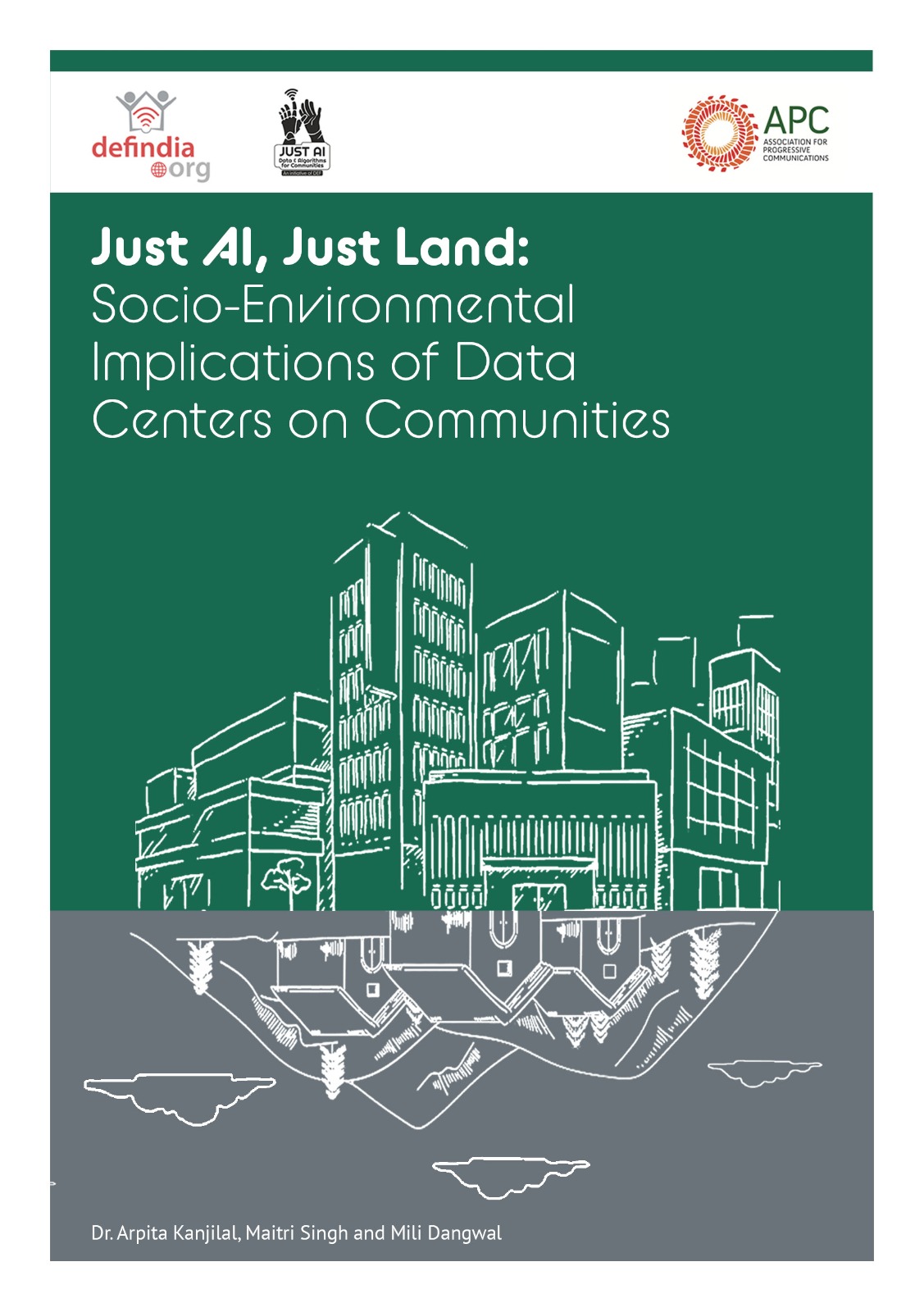
Artificial intelligence is often spoken about as inevitable, an unstoppable force shaping the future through innovation, efficiency, and global competitiveness. But inevitability, too, has consequences. In many parts of India, this future is already being built in tangible ways, on land, through water, and powered by vast amounts of energy. For communities living alongside this infrastructure, the story of AI is not abstract, but is deeply material.
Beneath the promise of digital growth lie a range of hidden costs, rarely accounted for in policy narratives, yet lived daily by those whose land, water, and livelihoods sustain this transformation.
The report “Just AI, Just Land“, authored by Dr. Arpita Kanjilal, Maitri Singh, and Mili Dangwal as part of the Digital Empowerment Foundation’s research, brings these realities into focus. Supported by the Association for Progressive Communications (APC), and developed with Knowledge Partners: Commons Collective and the AI + Planetary Justice Alliance; the study draws on conversations with communities in Telangana’s Mekaguda and Begarikancha villages.
What emerges is not a simple story of development, but a layered account of change, uncertainty, and negotiation.
These changes are not unfolding in isolation. The regions around Mekaguda and Begarikancha are being actively reimagined within Telangana’s broader vision of “Future City” and AI-led development, an effort to transform peri-urban landscapes into global hubs for digital infrastructure and investment. Within this vision, villages are increasingly positioned as sites of growth and opportunity. At the same time, this large-scale spatial transformation is reshaping land use, resource access, and local economies in ways that are not always visible in policy narratives.
In villages like Mekaguda and Begarikancha, the shift toward a digital economy is most visible in land. For many residents, land is not just a resource, but is inheritance, security, and identity. Its loss cannot be measured purely in monetary terms.
One farmer described the stark disparity in land transactions: “We got Rs. 7,70,000 for the land, and, to them, they [government] gave it to one crore plus.” But beyond price lies something deeper: “We got this from our forefathers. And now nothing is left.”
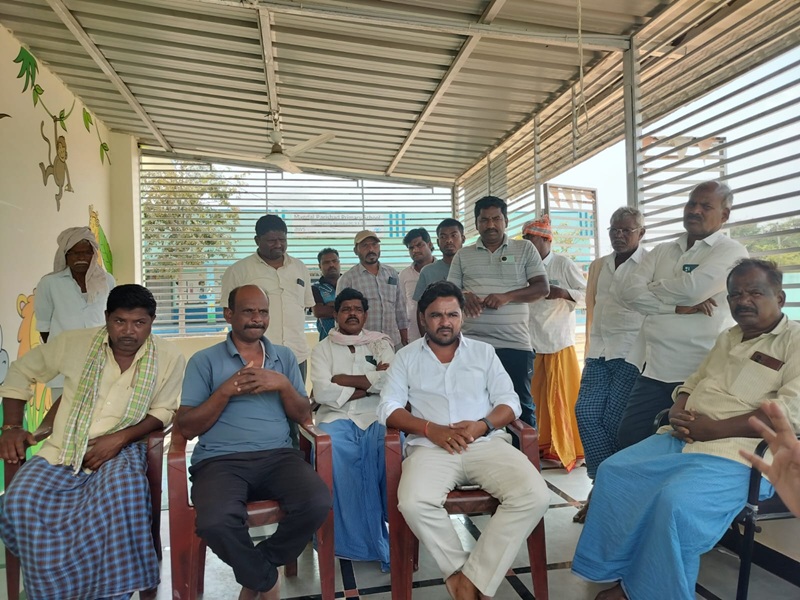
These are not isolated experiences. The report shows how acquisition processes often disadvantage those without formal documentation, many of whom have cultivated land for decades: “People who have been farming land for decades are left vulnerable because their ownership is not documented.”
These challenges are particularly acute in the case of assigned lands, which are government-allotted lands, legally non-transferable and often held by marginalized communities. The report highlights how such lands have been reacquired through compensation mechanisms that do not reflect current market value, leaving many, especially from SC, ST, and OBC communities, effectively landless and unable to rebuild their livelihoods.
Digital infrastructure, in this sense, intersects with existing inequalities, reshaping not just land ownership but also social and economic security.
Yet land is only one part of the story. These changes are unfolding in regions already undergoing shifts in agriculture and livelihoods. In Mekaguda, residents described how earlier industrial activity had already altered the local economy: “Before industries, there was agriculture in this area. Now, there is…Pharma Limited… Everything is polluted. So, people shifted to dairy. Also, they have to go to the company for menial jobs.”
These experiences point to a broader continuity between earlier phases of industrialisation and the emerging data center regime. While industries visibly altered land and livelihoods, data centers represent a more resource-intensive yet less visible form of infrastructure, one that continues patterns of extraction while often framed as clean and intangible.
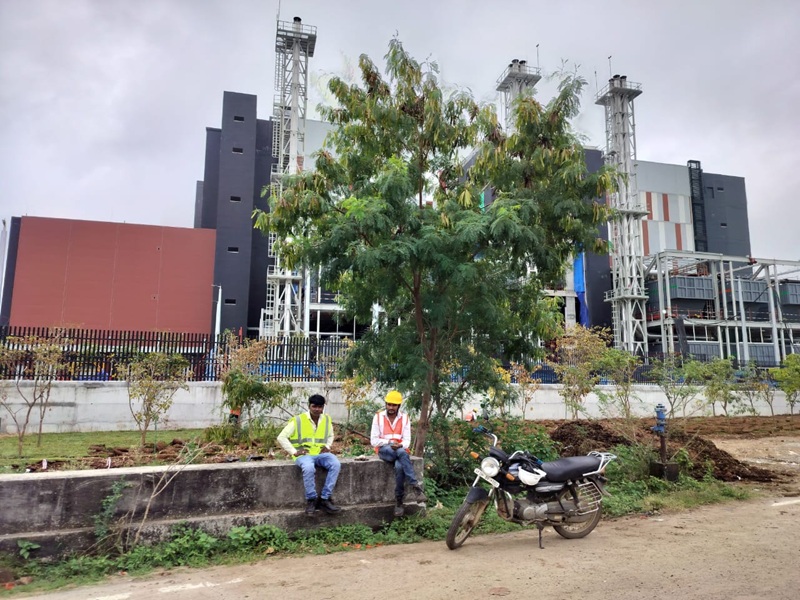
The arrival of data centers is seen as another turning point, one that may further reduce the viability of farming: “Once it starts, there will be a lot of usage… in the next 5 to 10 years, the water problem will be there. Anyways agriculture has reduced by like 50%.”
What emerges is a gradual but steady transition, where traditional livelihoods are replaced by uncertain alternatives.
Water sits at the center of these concerns. Data centers require large volumes for cooling, yet they are being built in areas already facing stress. Residents in Mekaguda described the everyday impact: “We already have water problems… If you drink water, the pain in the legs will increase.”
These infrastructures are not entering untouched landscapes but layering onto regions already affected by industrial pollution and groundwater depletion. The report also highlights a critical regulatory gap, while water use is acknowledged, there are no strong, enforceable mechanisms governing how it is sourced or managed. The question, then, is not just how much water data centers use, but who bears the burden when resources become scarce.
Energy, too, is central to this transformation. Data centers operate at massive scale, consuming electricity comparable to entire urban populations. Policies ensure uninterrupted supply and cost advantages for companies. For some, this raises concerns about fairness. As one community stakeholder put it: “They have to buy land at a cheaper rate… water at a cheaper rate… power at a cheaper rate.”
At the same time, uncertainty persists. A school principal shared: “We have not experienced any major power cuts, but… I feel they might emit radiation that could affect people’s health.”
These perceptions point to gaps not just in resource allocation, but in communication and awareness.
Despite these challenges, data centers are not seen only through a lens of loss. For many, they represent possibility. The promise of jobs and economic mobility is powerful, particularly for young people. But here too, expectations meet reality. As one resident explained: “I had hoped to get an entry-level job… But now… such opportunities are limited.” Another questioned how much benefit reaches local communities: “If the state itself does not receive even ten jobs, then expecting even one job for a village becomes highly unlikely.”
This gap between aspiration and reality is further reflected in individual experiences. In one case, a trained engineer was employed as a security guard at a data center while simultaneously pursuing a legal case for fair compensation for his acquired land. His situation reflects the convergence of livelihood precarity and land dispossession, where even education does not guarantee upward mobility in the emerging digital economy.
This shift also points to a broader pattern of labour precarity. As traditional livelihoods decline and formal employment opportunities remain limited, affected communities are increasingly pushed toward informal, contractual, or gig-like forms of work. While these may offer short-term income, they often lack stability, protections, and long-term security, raising concerns about the quality, not just the availability, of livelihoods in the emerging digital economy.
Running through these experiences is a deeper issue of participation. Many community members and local representatives reported being excluded from decisions about these projects. Information on how data centers function, how resources are used, or what safeguards exist remains limited.
This exclusion is particularly significant in the context of Panchayati Raj Institutions, which are constitutionally mandated to represent local governance. Elected village heads and ward members reported limited consultation and a lack of clarity about data center projects, restricting their ability to engage with or question these developments. Centering these institutions and ensuring a community-in-loop approach within decision-making processes is critical, not only for accountability but for aligning infrastructure development with local needs and priorities.
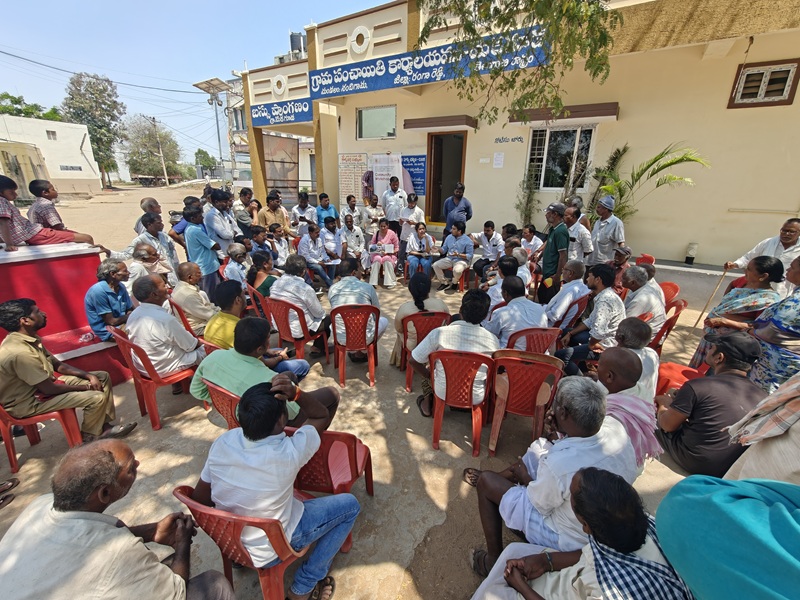
This also underscores the urgent need for mandatory disclosures around land acquisition, water use, energy consumption, and environmental impact, ensuring that communities and local institutions have access to information that is currently opaque and unevenly distributed.
This reflects a broader governance challenge. The report frames this through a data justice lens, asking who benefits, who participates, and whose knowledge is recognized. It also draws on feminist political ecology to show that these transformations are not just technical, but deeply social, shaped by inequality, power, and everyday practices of care.
Crucially, the impacts of data centers are not confined to those directly displaced or immediately affected by land acquisition. Instead, they extend outward, reshaping water systems, energy distribution, and ecological conditions over time. In this sense, the category of “affected communities” must be expanded to include those who experience these changes indirectly, through shifting resource access and environmental stress. This is particularly significant in the context of data centers, whose demands on water and energy operate at regional and state levels, generating ripple effects that influence populations far beyond their immediate locations. As communities themselves point out, these are not just present challenges, but intergenerational ones, raising questions about what happens to agriculture, to water, and to future livelihoods. These concerns are already reflected in how people speak about the future. What will happen to agriculture? To water? To the next generation?
These developments are not occurring in a policy vacuum. Recent fiscal measures, including long-term tax holidays for foreign cloud and data center operators, signal a strong state-led push to position India as a global digital hub. In doing so, data centers are effectively treated as strategic infrastructure. While these measures aim to attract investment and accelerate digital growth, they also raise critical questions about how public resources such as land, water, and energy are allocated, and who ultimately bears the costs. In many cases, these hidden costs are absorbed by local communities.
These questions point to the need for a different approach to digital development, one that moves toward community-centric AI governance, grounded in bottom-up policymaking rather than top-down implementation. The report calls for a participatory framework that prioritizes transparency, accountability, and inclusive decision-making. This includes recognizing data centers as socio-ecological systems, strengthening environmental regulation, ensuring fair land governance, and supporting livelihood transitions.
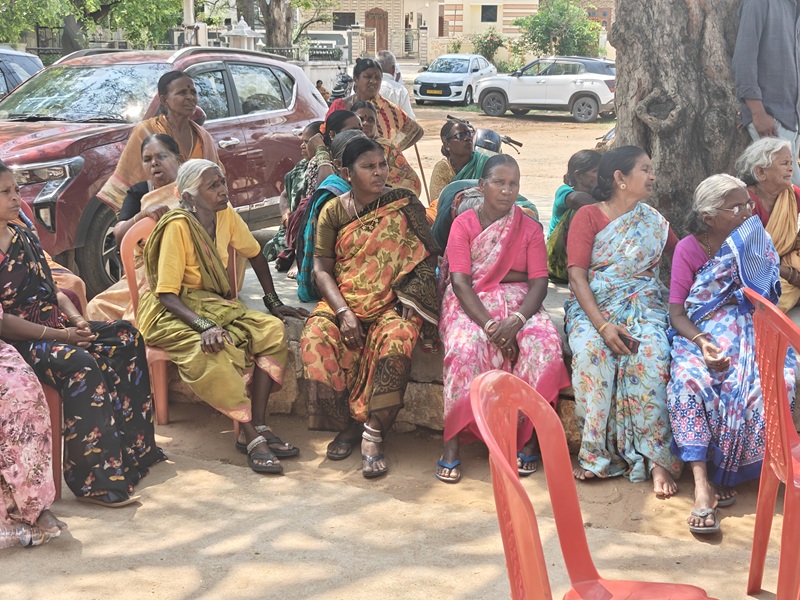
As data centers expand, the realities from Mekaguda and Begarikancha underscore a critical gap between digital ambition and grounded governance. The impacts of AI infrastructure are not abstract, but are embedded in land systems, water access, energy distribution, and livelihood transitions.
This sense of loss is perhaps best captured in a farmer’s words: “We got this from our forefathers. And now nothing is left.”
These lived experiences reveal the hidden costs of AI-driven development, where benefits are concentrated while ecological and social burdens are unevenly distributed.
Building a people-centric digital public infrastructure is not just about connectivity or efficiency, but is about ensuring that development is equitable, accountable, and rooted in the realities of those it affects. If AI-led growth is to contribute to an inclusive digital society, it must be anchored in community-centric AI governance, ensuring transparency, equitable resource allocation, and meaningful community participation. Because if AI is inevitable, then its costs cannot remain invisible, and accountability, inclusion, and justice must be non-negotiable.
Related posts


