


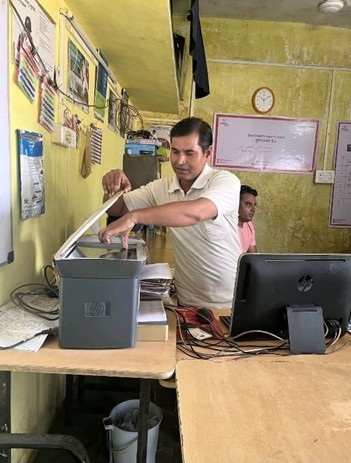
In the quiet village of Umri, Madhya Pradesh, a steady stream of villagers walks into a small digital service center. Inside, Purushottam Dhakad greets them with a smile, guiding each one patiently through forms, documents, and online applications. For the people here, he is more than a service provider—he’s their bridge to a world that was once far beyond their reach.
A decade ago, Purushottam joined the Digital Empowerment Foundation (DEF) with a modest salary and a big mission: to close the digital gap separating India’s rural poor from their entitlements. Back then, even a simple government benefit card demanded a day’s travel, lost wages, and nearly ₹700 in expenses. Dhakad offered to do it for ₹30, right from the village—bringing the power of access to the doorstep of the poor.
What began as an effort to simplify paperwork soon turned into a story of infrastructure-led inclusion. DEF’s initiative provided the foundational support—connectivity, digital tools, and training—that enabled Dhakad to grow into a local digital entrepreneur, or Soochnapreneur. His center, equipped with basic internet access and devices, became a hub where farmers, laborers, and women could avail government schemes, apply for loans, or simply get a document printed.
Over time, Dhakad’s network expanded. From helping farmers secure loans for onion storage and subsidies for fertilizers to ensuring women accessed welfare schemes like Ladli Behna and Ladli Laxmi, he became a trusted node in the region’s digital ecosystem. Every transaction—whether a pension, a subsidy, or an ID card—passed through his small center, turning digital infrastructure into a lifeline for rural livelihoods.
Between 2015 and 2025, Dhakad facilitated over 36,000 digital services across 54 categories, printing and processing more than 50,000 documents. His story illustrates how access to basic infrastructure, when combined with local leadership and digital literacy, can transform dependency into empowerment.For Purushottam Dhakad, the internet was never just about connectivity—it was about community access