


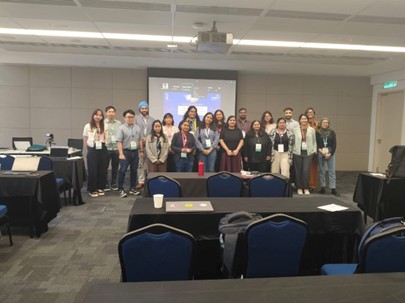
The Digital Empowerment Foundation (DEF) participated in the Digital Rights Asia-Pacific Assembly 2025 (DRAPAC25), held from 26–28 August in Kuala Lumpur, which brought together practitioners, researchers, journalists, and civil society members from across the Asia-Pacific to discuss digital rights, governance, and community-centered technology solutions. The assembly explored the theme “Collective Digital Futures: Power, Resilience, and Imagination,” highlighting common challenges across diverse contexts.
One of the most impactful sessions was Tracing Data Trails, a “datawalking” workshop mapping surveillance in everyday spaces. Participants reflected on how cameras, Wi-Fi, and digital devices constantly monitor movement, revealing that private spaces are nearly nonexistent. The exercise also raised questions about whose safety surveillance serves and whose access it restricts, emphasizing the social and class dimensions of monitoring.
DEF contributed to the workshop on Designing Rights-Respecting, Inclusive Digital Public Infrastructures (DPIs). Discussions centered on making digital systems like IDs, payments, and health platforms accessible, culturally sensitive, and community-driven. Examples included Sri Lanka’s Elixir platform and DEF’s Healthpreneurs initiative in India, where trained facilitators help remote communities access digital health services, demonstrating that human support is vital for inclusion.

Other sessions explored gendered digital surveillance, highlighting how women, queer, and gender-diverse individuals are disproportionately monitored, with apps and public infrastructure commodifying personal data. Discussions on alternative funding models emphasized shared infrastructure, social enterprises, mutual aid, and coalition-based fundraising as strategies to sustain community-focused work amidst global funding shifts.
It also examined internet shutdowns, focusing on their community impacts and strategies to resist them. The closing plenary reflected on growing corporate and state control over digital technologies, historical inequities replicated in AI and data extraction, and widening North–South disparities in technology governance. Yet the assembly remained optimistic, fostering collective imagination, knowledge exchange, and grassroots solutions to reclaim digital spaces.
DRAPAC25 underscored the importance of rights-based, inclusive, and community-driven approaches to digital infrastructure, surveillance, and civil society sustainability. It reinforced that ethical technology design, human facilitation, collaboration, and local engagement are essential for equitable digital futures across the Asia-Pacific.